
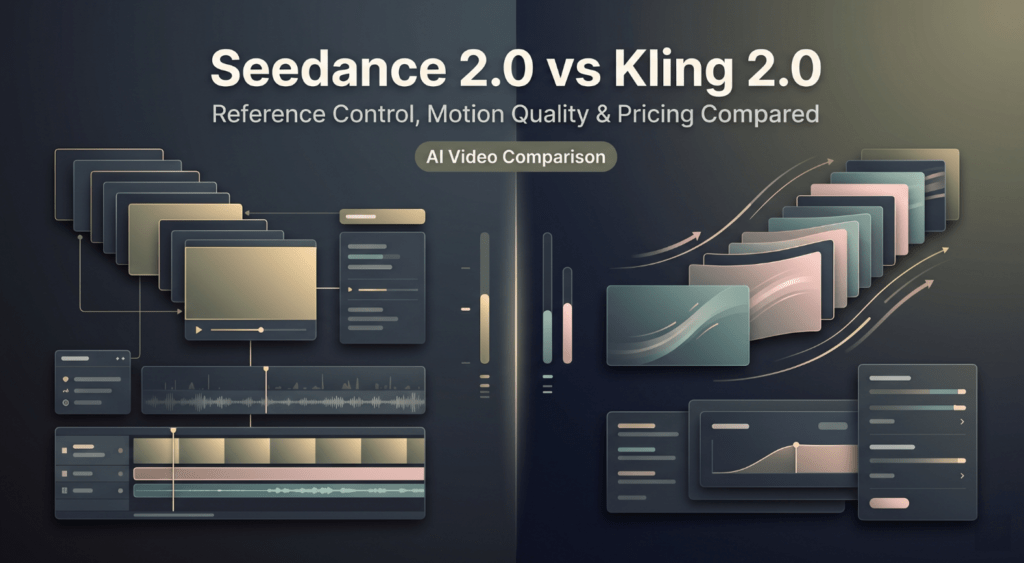
Two weeks ago I was on a Wednesday-night call with a friend who runs a small beauty brand. She had three product hero shots, five “vibe” reference images, and a rough idea in her head — one 15-second clip per product for a spring campaign. Her question: “Should I try Seedance 2.0 or Kling 2.0?” She’d been reading comparison threads and was more confused than when she started.
That’s the situation most of us are in. If you’re a freelance designer juggling clients, an e-commerce founder trying to make ads without a studio, or a content creator who finally got budget for AI video — you’re not choosing between “the best” and “the worst.” You’re choosing between two models that do genuinely different things well. This piece walks through what actually separates them in reference control, motion quality, audio, and pricing, so by the end you’ll know which one belongs in your pipeline. I tested both in April 2026 with the same set of product assets; the differences were more specific than the marketing pages let on.
The fundamental difference in how each model approaches generation
Both models generate video from prompts and images. That’s where the similarity ends.
Seedance 2.0 — reference-anchored, audio-native
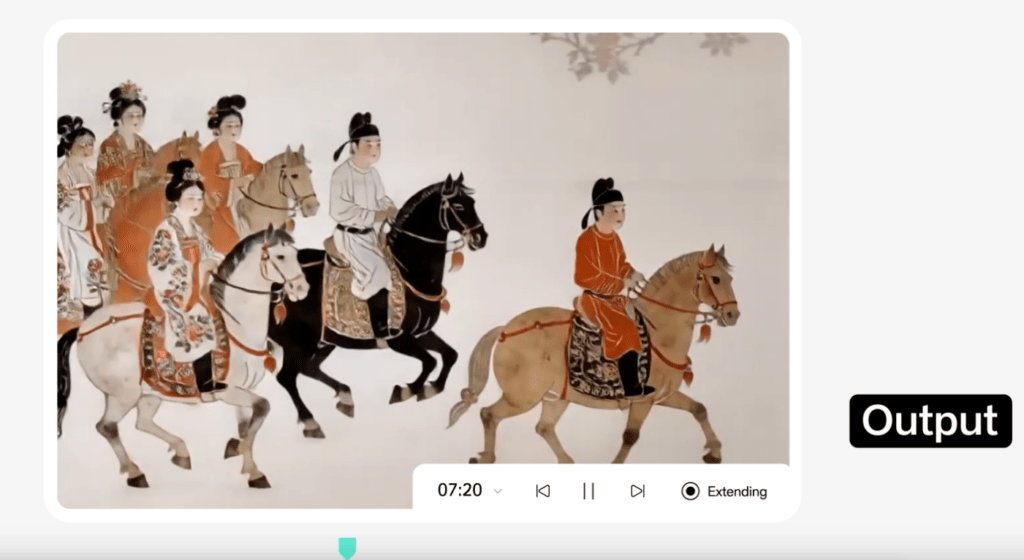
Seedance 2.0 is ByteDance’s unified multimodal model, launched February 12, 2026. What makes it unusual: in a single generation pass, it accepts up to 9 reference images, 3 reference video clips, and 3 audio files alongside your text prompt, and outputs synchronized video plus dual-channel stereo audio. The official Seedance 2.0 launch post lays out the architecture in more detail — worth a read if you want to understand why reference fidelity is the whole point.
The upshot: Seedance treats your reference materials as the primary source of truth. The prompt describes what happens; your references describe what it looks like.
Kling 2.0 — cinematic quality focus, strong motion realism
Kling 2.0 Master, released by Kuaishou in April 2025, took a different path. It doubled down on motion quality and cinematic visual polish. The model handles text-to-video and image-to-video at 720p, with a 5-second standard clip length and strong support for camera direction — push-ins, orbits, handheld micro-shake, tracking shots, all documented in the Kling 2.0 Master model page on fal. No native audio at this version (that came later in Kling’s 2.6 release).
Where Seedance is a reference-driven director’s board, Kling 2.0 is a camera crew with great instincts. Both valid. Very different briefs.
Reference control comparison
This is where the two models feel the most different in daily use.
Multi-image reference input flexibility
Seedance 2.0 accepts 9 images + 3 videos + 3 audio clips per generation. Kling 2.0 Master accepts one starting image (and optionally one end frame). That’s not a small gap — it’s a categorical one. If your workflow involves a product shot plus a lifestyle mood board plus a reference clip for camera motion, Seedance handles that in one pass. With Kling 2.0 you’d generate, regenerate, and stitch. On the beauty campaign I mentioned at the start, that difference alone saved us about three hours of comp work across six products.
Identity consistency across multi-shot series
For a multi-shot series — same character or product appearing in three or four scenes — Seedance’s @ reference system lets you pin the subject and vary everything else. Kling 2.0 requires you to re-anchor each shot separately, which means small drift in facial features or packaging details between clips. Not catastrophic, but noticeable on brand content where the same product has to look like the same product.
Why clean cutouts give Seedance 2.0 a measurable edge
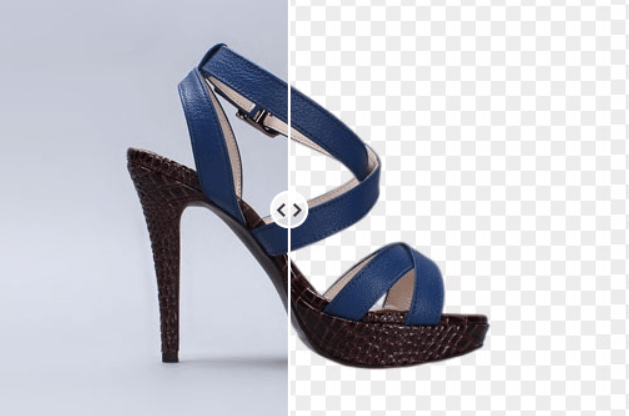
Here’s the part nobody writes about honestly: Seedance’s reference power only works if your references are clean. I learned this the uncomfortable way. The first batch of tests I ran, I fed in product images with leftover background halos from a rushed cutout — nothing obvious to my eye. Seedance faithfully reproduced those halos, frame after frame, sometimes flickering at the edges. The model wasn’t broken; the input was dirty.
Once I switched to properly cut product references, edge flicker dropped, identity consistency held across 15-second clips, and motion looked anchored rather than floating. If you want the full walkthrough of the prep flow, I wrote it up separately — the clean cutout reference workflow covers exactly what I changed. Short version: the model is only as good as what you hand it. Before blaming the AI, check the original image.
Motion quality and camera control
Smooth camera moves — which model handles what better
Kling 2.0 Master is the stronger pure cinematographer. Camera dollies, slow pushes, orbits — they feel filmic, with the kind of subtle weight and hesitation you’d get from a real operator. When I ran a “slow push-in on a perfume bottle, golden hour side light” prompt on both, Kling’s camera felt more deliberate. Seedance’s was competent but slightly less characterful on that specific ask.
Seedance catches up — and pulls ahead — once camera motion has to coordinate with multiple subjects or audio cues. Director-level control is the phrase ByteDance uses, and it tracks.
Subject motion and physics realism
Both models handle human motion well in 2026 standards. Seedance 2.0 has a measurable edge in complex multi-subject interaction (hand-offs, crowd scenes, sports-like sequences), which ByteDance benchmarked heavily at launch. Kling 2.0 tends to win on single-subject emotional micro-expression — small smiles, hair sway, subtle weight shifts that make a portrait feel alive rather than posed.
Fast action vs slow cinematic pacing
Fast action (sports, dance, combat) → Seedance 2.0, fewer artifacts in high-motion frames. Slow cinematic pacing (portraits, product beauty shots, atmospheric scenes) → Kling 2.0 Master, more refined softness in the falloff.
Native audio vs post-production audio
Seedance 2.0 native audio: dialogue, SFX, BGM in one pass
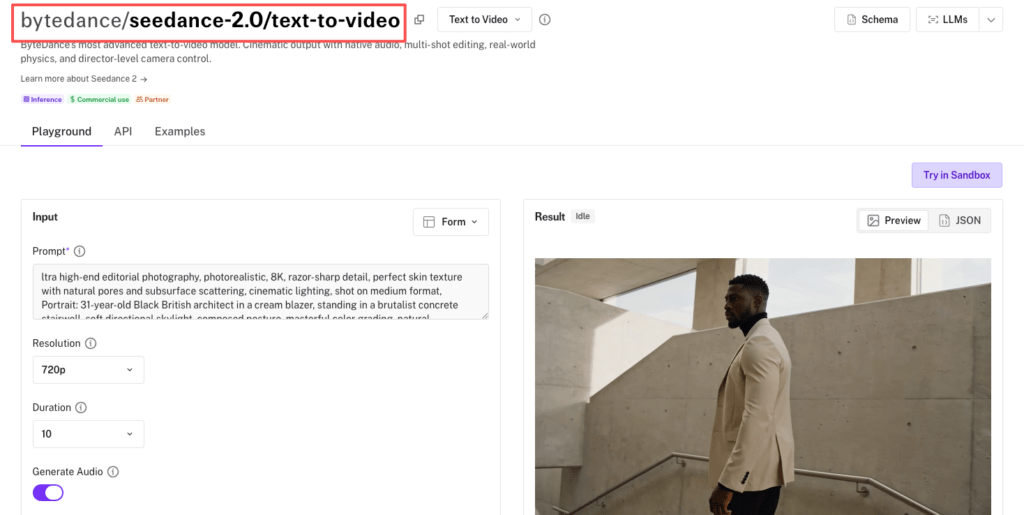
Seedance generates dual-channel stereo audio synchronized to the video in a single pass — dialogue, ambient sound, and background music all timed to on-screen action. The Seedance 2.0 API documentation on fal details the supported input modalities including audio references, which is how you pin a specific music track or voice style to the generation.
For character dialogue content, this is a real time-saver. No separate TTS pass, no lip-sync alignment, no mixing session. One pass and the dialogue is there, roughly timed to mouth movement.
Kling 2.0 audio approach
Kling 2.0 Master doesn’t generate native audio. You generate silent video, then add audio in post — either manually or through a separate TTS/SFX pipeline. Kling added native audio in the 2.6 release later in 2025, but the 2.0 Master version we’re comparing here is silent by design.
When silent generation + post audio beats native
Honestly? Often. Native audio is magical when it works, but if you already have licensed music, a voiceover artist, or a sound designer, silent generation gives you more control. You avoid the situation where the AI-generated soundtrack almost fits but not quite, and now you’re stuck between accepting a compromise or regenerating.
My rule: native audio for fast turnarounds and dialogue; silent + post for branded campaigns where audio standards are tight.
Pricing comparison
Cost per 16s clip at standard quality
Rough April 2026 benchmarks, not exact because every API reseller prices differently:
- Seedance 2.0 via fal standard endpoint: around $0.30/second at 720p, so a 15-second clip lands near $4.50. Fast tier variants and some third-party providers drop that significantly — EvoLink’s Fast route sits around $0.16/s at 720p.
- Kling 2.0 Master via fal: roughly $0.28/second for the Master tier. A 5-second clip costs about $1.40; scaling to 15 seconds means generating three clips and stitching.
Not hugely different on paper. The real difference shows up in re-generation cost — Seedance’s 15-second single-pass output means fewer regenerations per finished minute, while Kling’s shorter clips require more attempts to build longer sequences.
Free tier limits on each platform
Seedance 2.0 has a generous free entry through Dreamina (ByteDance’s international creative platform) with daily login credits — enough for 2–3 short clips per day. Kling AI’s free tier on the official platform offers 66 daily credits, enough for roughly one Master-tier generation.
Both are fine for testing. Neither sustains a real production workflow.
API access and developer pricing
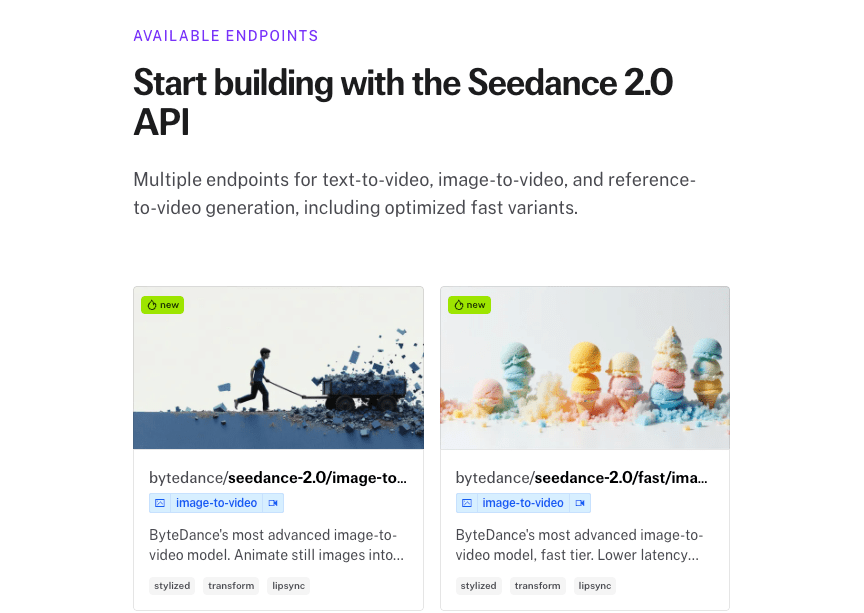
Both models are available via fal, PiAPI, and several regional resellers. Seedance 2.0’s global API went live April 9, 2026; the official fal Seedance 2.0 listing is the most developer-friendly entry point I’ve used. Kling 2.0 Master has been API-accessible since its 2025 launch, with documentation that’s decent but slightly older. For teams building production pipelines, I’d suggest prototyping on whichever tier gives you free credits, then committing to a reseller once you know your actual generation volume per month.
Decision guide — which to use when
Product ads and e-commerce → Seedance 2.0
Multi-reference input + identity consistency + 15-second single-pass = Seedance wins here. Especially if you’re doing e-commerce lifestyle video where the product has to look exactly like the product.
Cinematic short films → Kling 2.0
For pure filmic mood — portraits, narrative scenes, atmospheric beauty shots with strong camera direction — Kling 2.0 Master still feels more refined in its motion character.
Character dialogue content → Seedance 2.0
Native audio with lip-sync in one pass. Kling 2.0 needs a separate audio pipeline. No contest for dialogue-heavy work.
FAQ
Q1: Can I use both models in the same production pipeline? Yes, and I’d recommend it if budget allows. Use Seedance for reference-heavy product shots and dialogue; use Kling 2.0 for atmospheric B-roll and cinematic cutaways. They complement each other better than they compete.
Q2: Which handles hair and clothing details better? Kling 2.0 Master has a slight edge on fine clothing drape and hair micro-motion. Seedance is stronger on consistent rendering of the same hair/clothing across multiple shots.
Q3: Which has better API documentation for developers? Seedance 2.0’s fal listing and BytePlus docs are cleaner and more current. Kling’s docs are functional but spread across multiple providers and versions.
Q4: How do generation speeds compare? Seedance 2.0 Fast tier returns a 5-second 720p clip in roughly 30–60 seconds. Kling 2.0 Master typically takes 1–3 minutes for a 5-second clip at similar quality. Both acceptable; neither real-time.
Q5: Which model is better for non-English content? Seedance handles Chinese and English natively for audio; other languages are auto-translated. Kling 2.0 Master, being silent, sidesteps the language question — add localized audio in post. For non-English dialogue, I’d test both on your target language before committing.
The useful framing isn’t “which is better.” It’s “which matches the job I’m doing this week.” Reference-heavy product work with dialogue — Seedance. Mood-driven cinematic short — Kling 2.0. Mixed pipeline — both. Run a small test batch on your actual assets before committing, because demos on both sites will always look better than your own first try. That’s not the tool’s fault; that’s just how these models work.
Previous Posts:
HappyHorse-1.0 vs Seedance 2.0: Rankings and Limits
Seedance 2.0 Image to Video: Turn One Photo Into a Consistent 16s Clip
How to Use Seedance 2.0 Text to Video: Step-by-Step Guide for Beginners
Seedance 2.0 Pricing: Free Tier, Plans, and How to Estimate Your Monthly Cost
Seedance 2.0 Workflow: From Raw Photo to Final Video in 6 Steps